
The Rutland entree dishes - a magnificent set of four george III silver entree dishes


The Rutland entree dishes - a magnificent set of four george III silver entree dishes
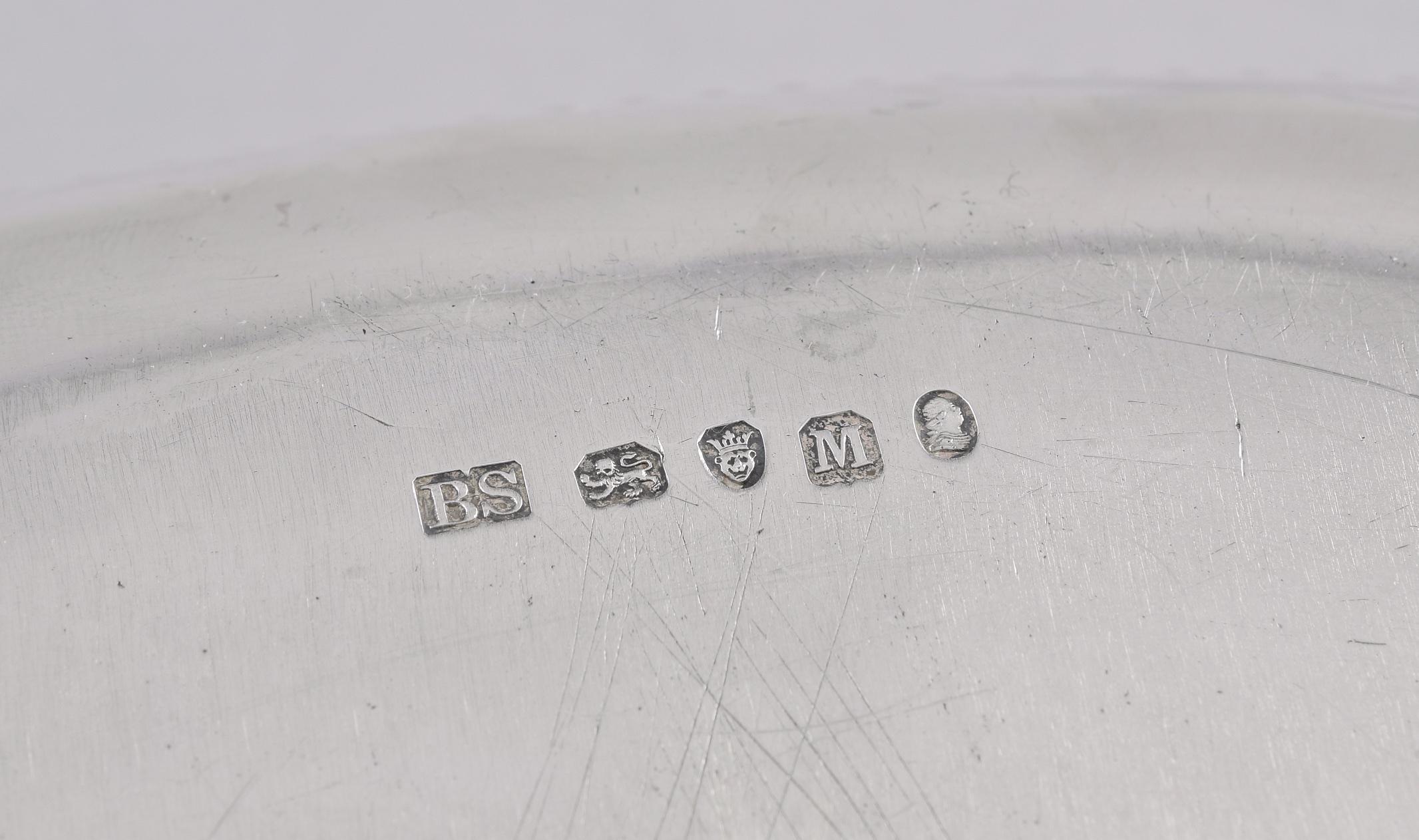
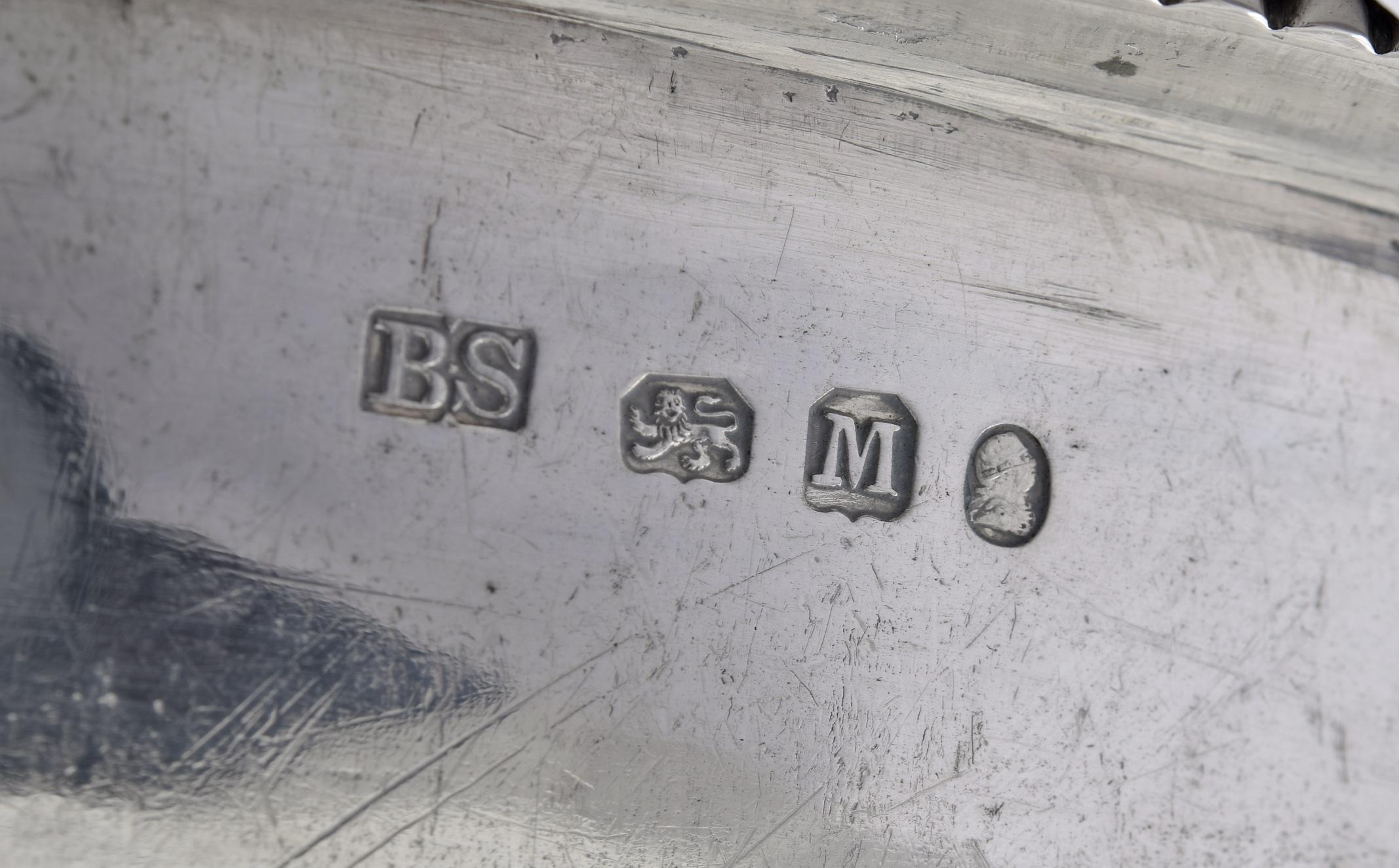
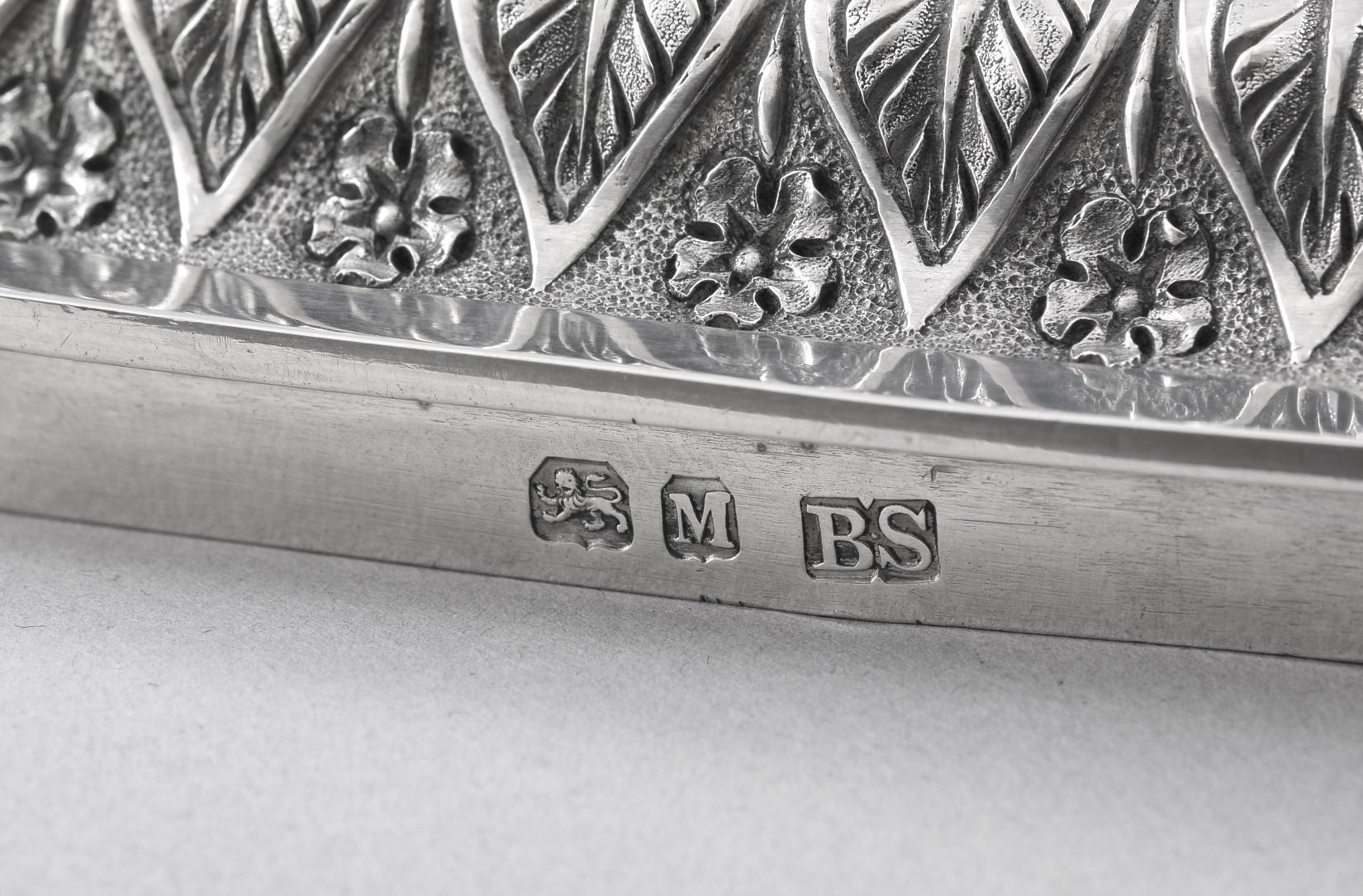
Hallmarks for Benjamin Smith, London 1807
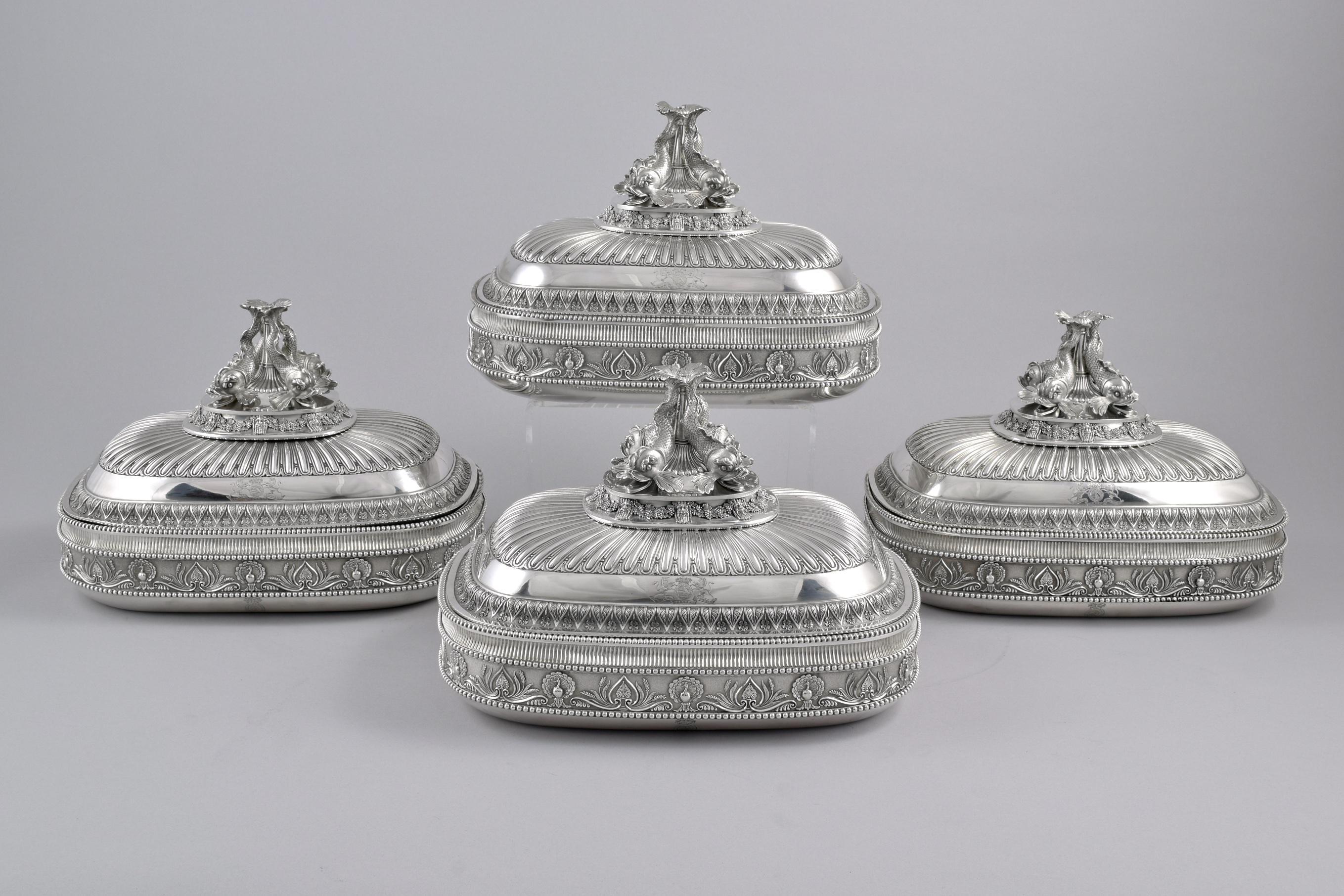
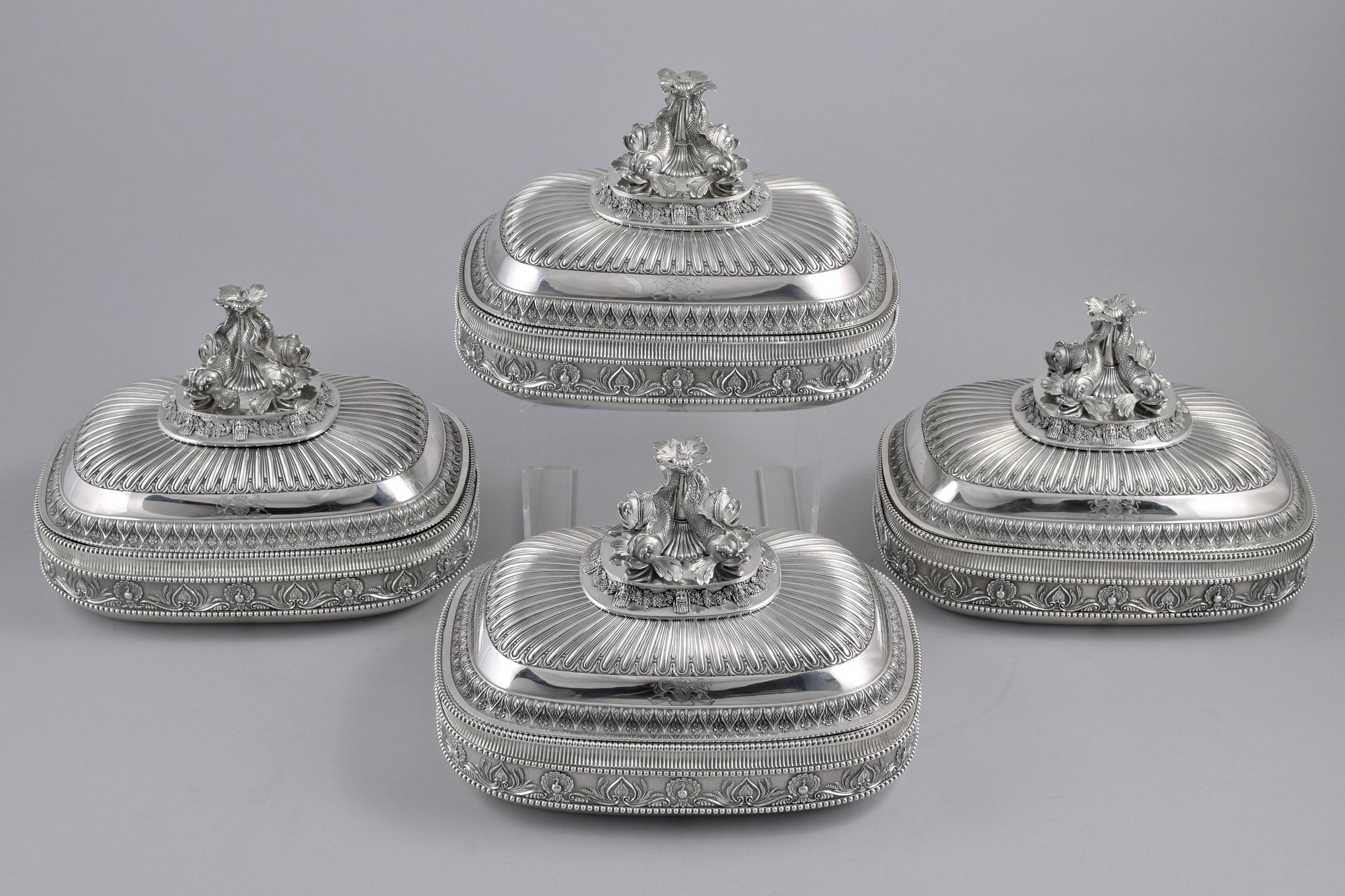
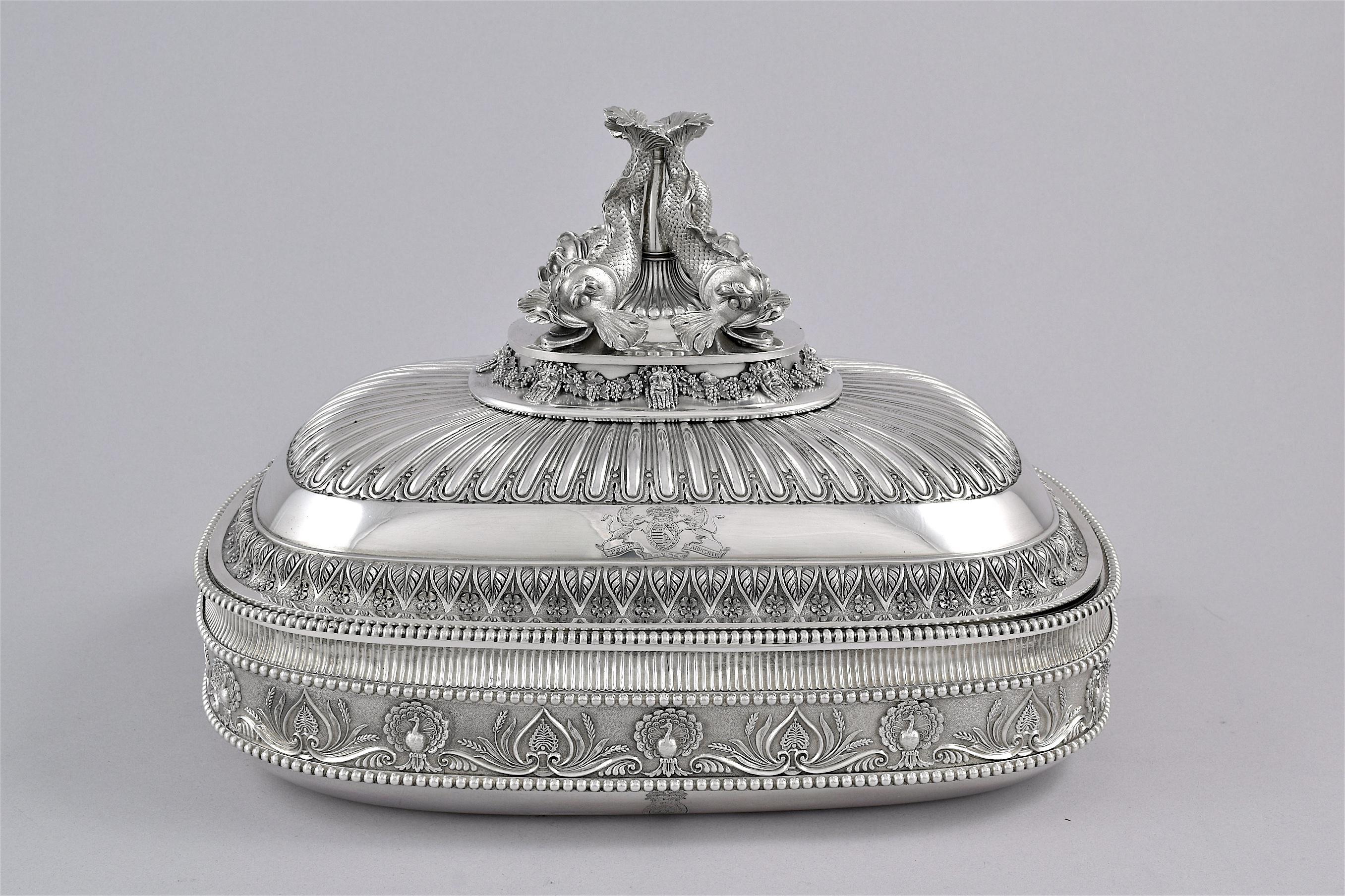
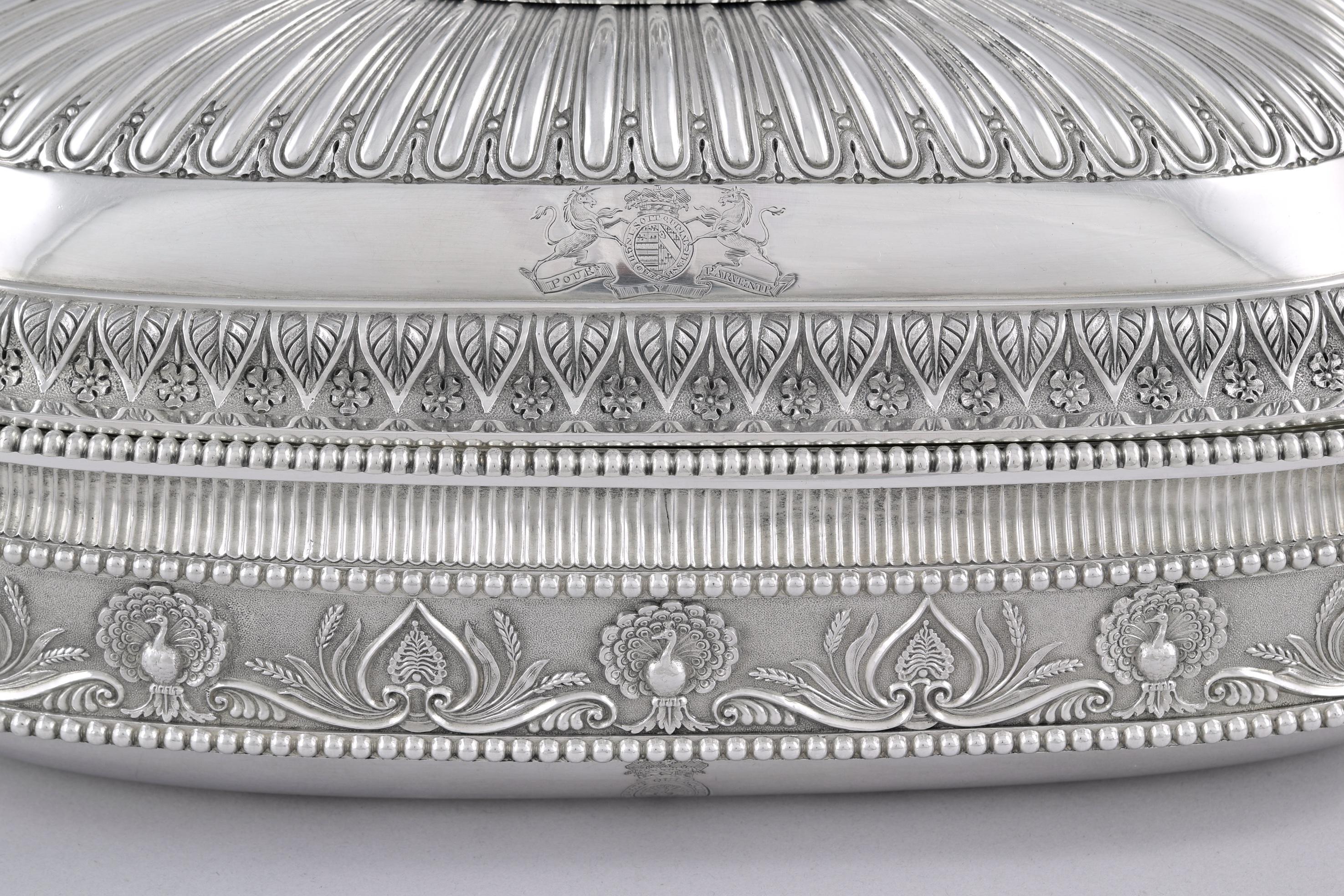
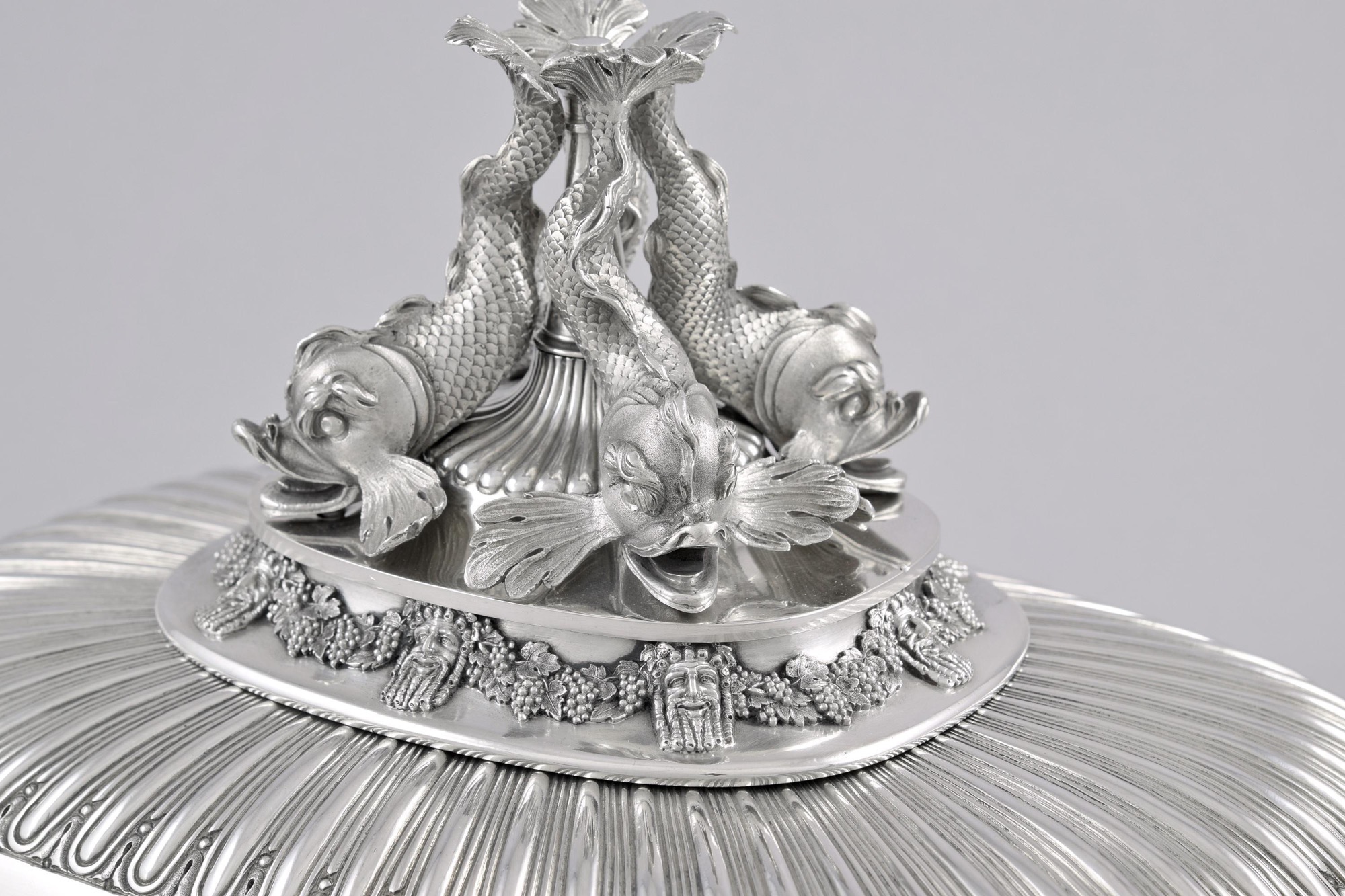
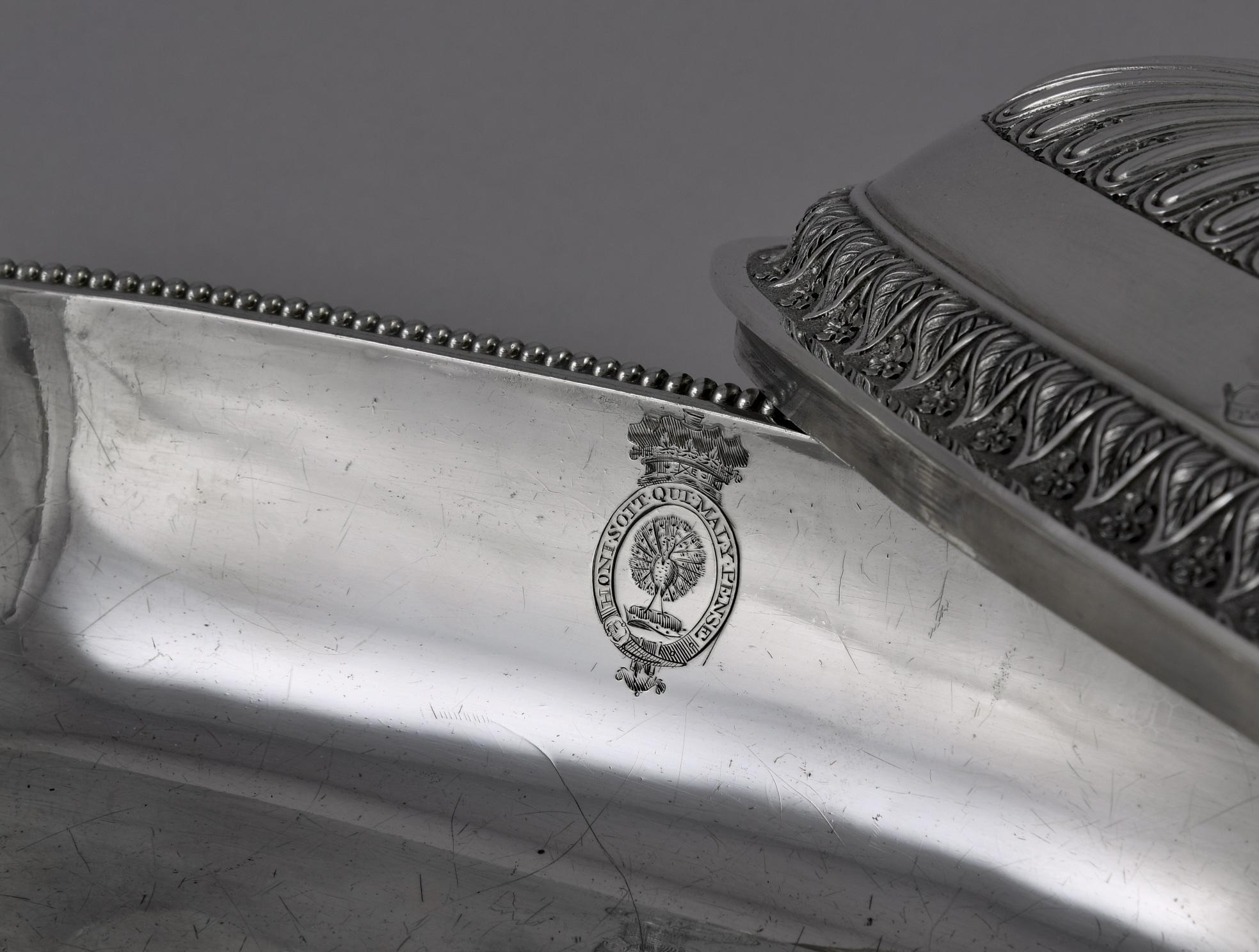
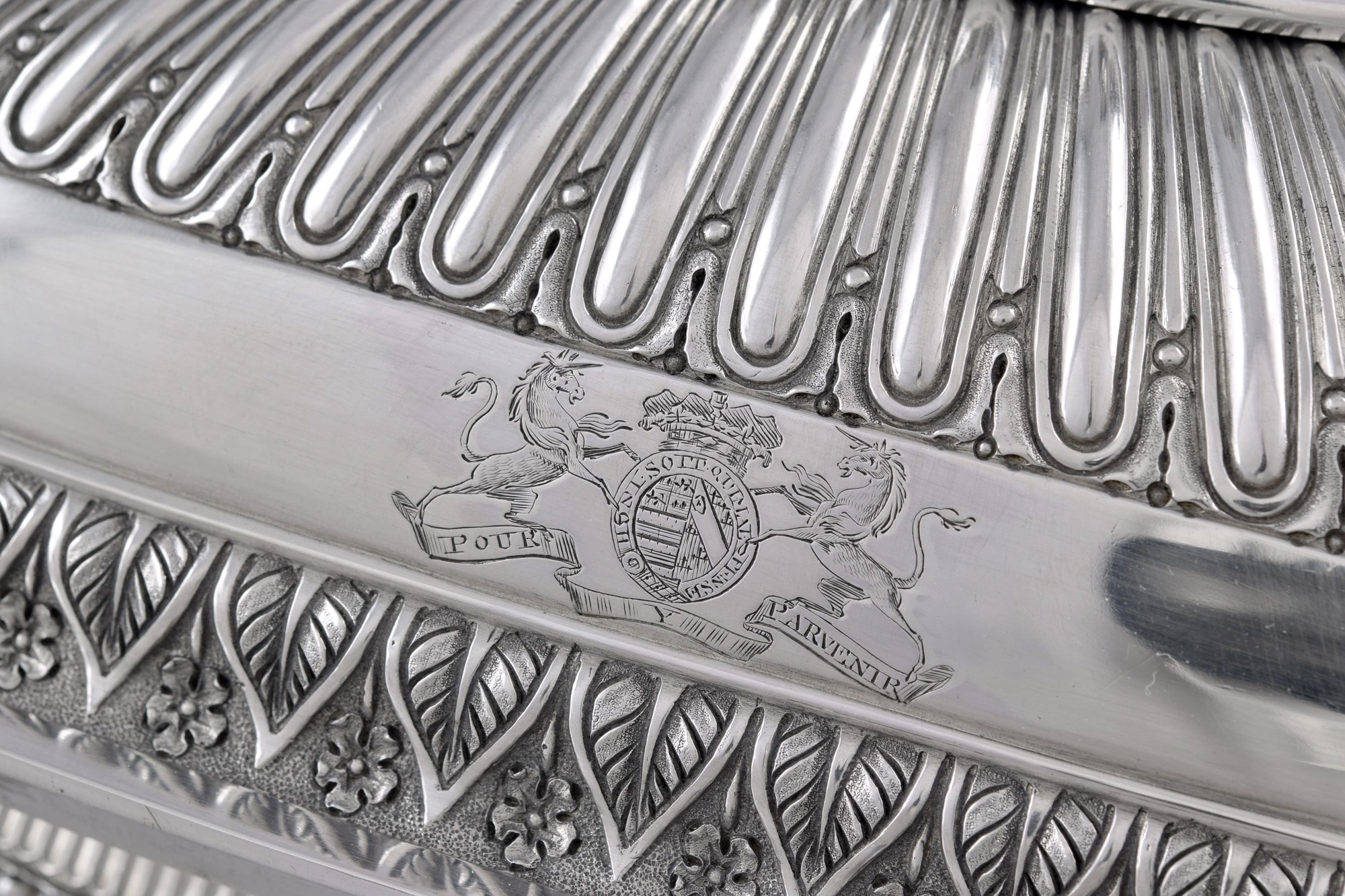
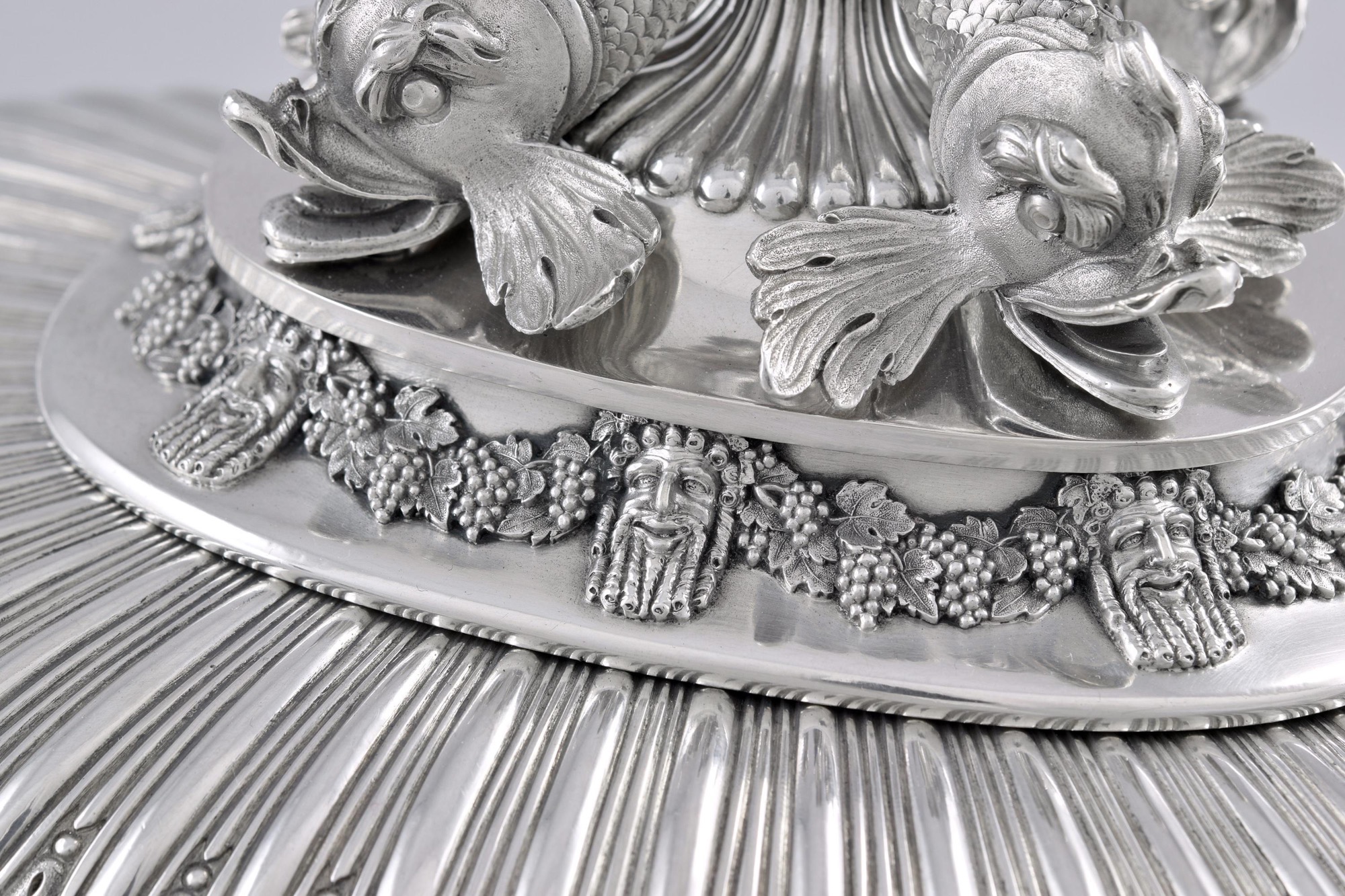
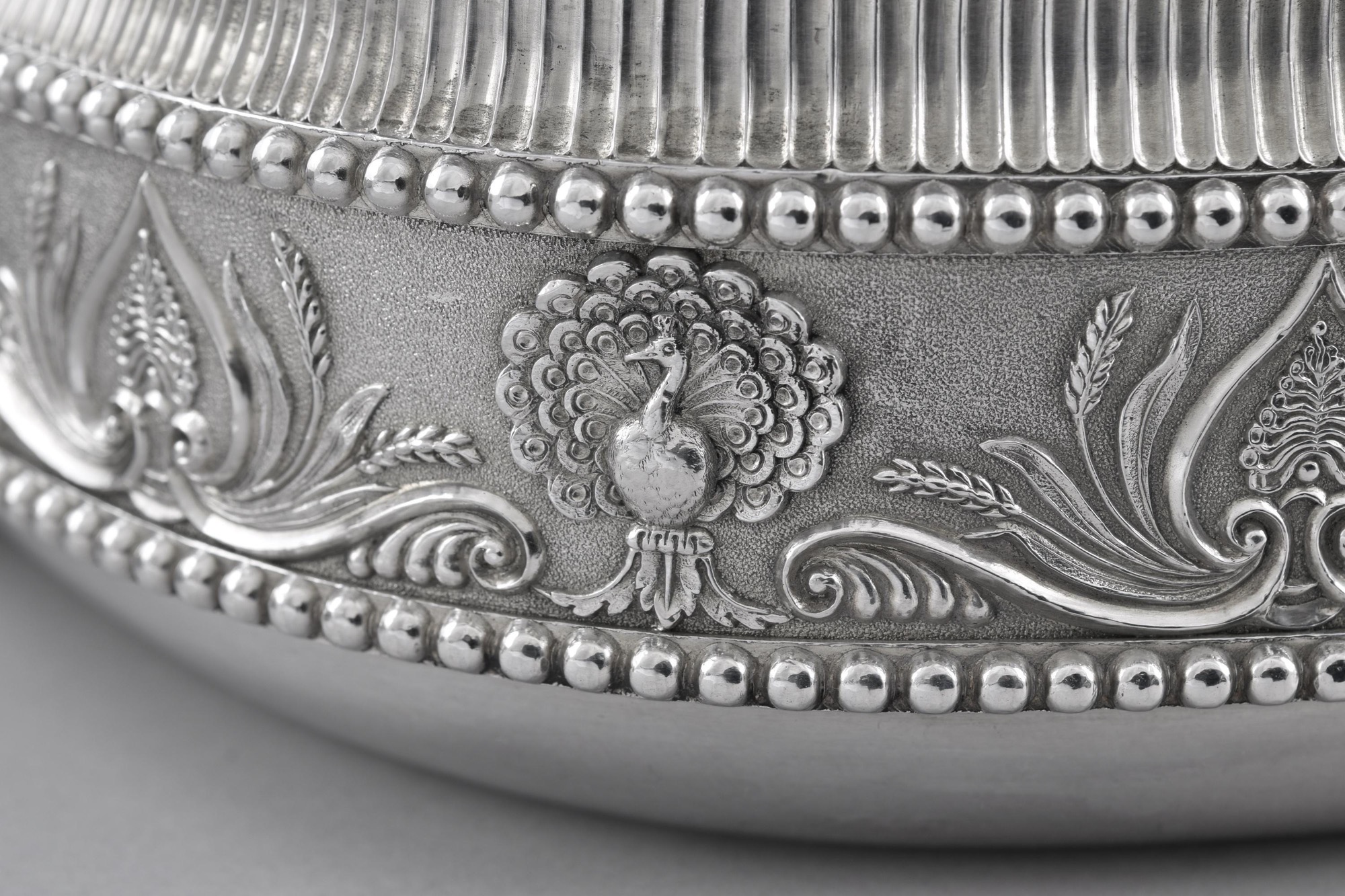
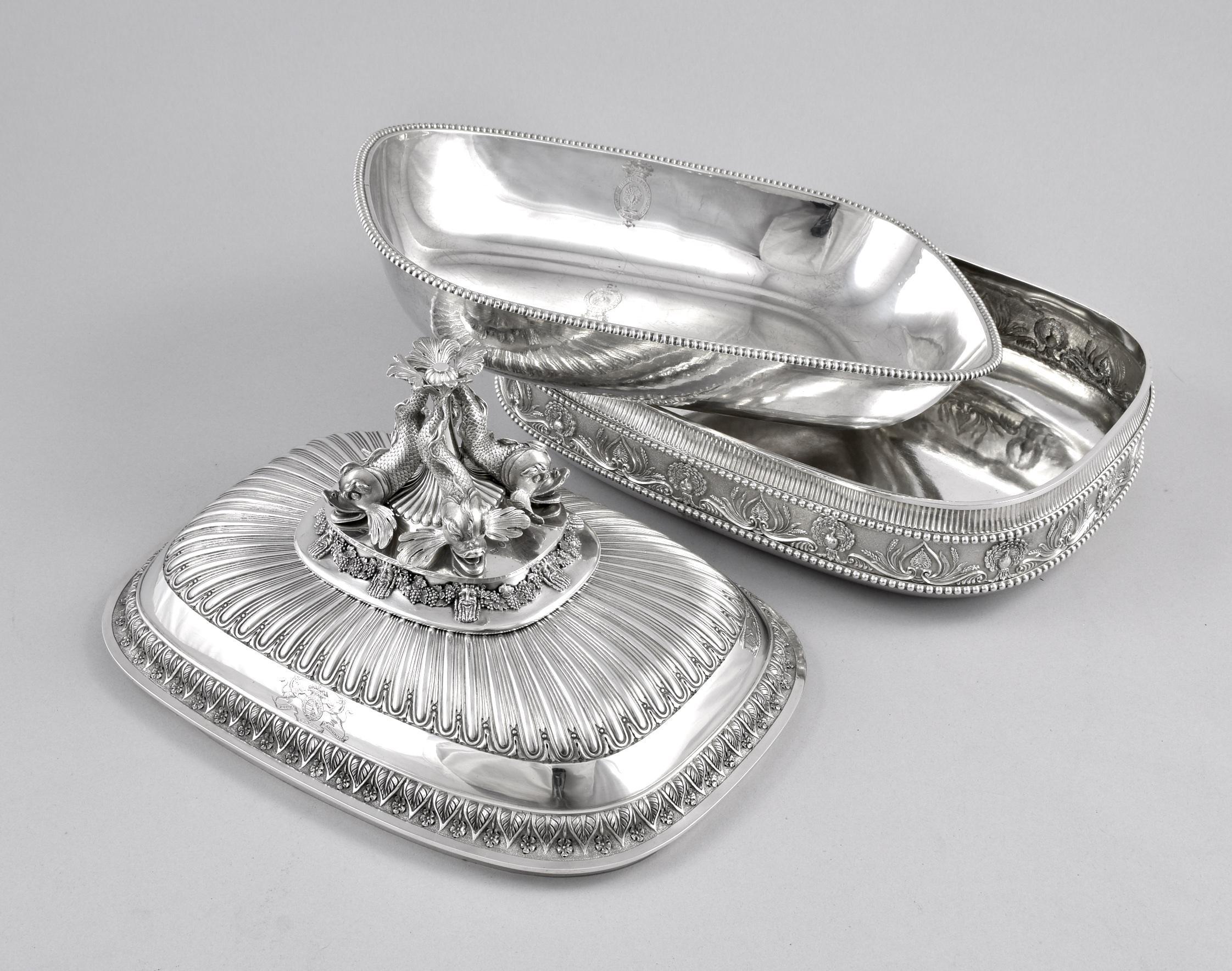
Of rounded rectangular form, the bases with an outer frieze of peacocks and anthemia, the covers with a band of palmettes and flowers The finials are each formed as four dolphins above cast relief band of grapevine swags between Greek masks. The dishes with beaded rims, each cover engraved twice with arms, the dishes and bases engraved twice with crests within garter motto and below a ducal coronet, numbered 1-4
Provenance
John Henry, 5th Duke
...
Hallmarks for Benjamin Smith, London 1807
Of rounded rectangular form, the bases with an outer frieze of peacocks and anthemia, the covers with a band of palmettes and flowers The finials are each formed as four dolphins above cast relief band of grapevine swags between Greek masks. The dishes with beaded rims, each cover engraved twice with arms, the dishes and bases engraved twice with crests within garter motto and below a ducal coronet, numbered 1-4
Provenance
John Henry, 5th Duke
of Rutland (1778-1857), by descent to
Charles John Robert, 10th Duke of Rutland, C.B.E., sold
Christie's, London, January 26, 1944, lot 43
The Alan and Simone Hartman Collection, sold
Christie's New York, 20th October 1999, lot 178
The Chen Collection, sold
Lyon & Turnbull, London, November 23, 2008, lot 165
Exhibited
Staten Island Institute of Arts and Sciences, English Regency Silver from the Collection of Alan and Simone Hartman, February-June 1995, no. 11
The arms are those of John Henry, K.G., 5th Duke of Rutland, impaling Howard, for his wife Elizabeth, daughter of the Earl of Carlisle.
The Rutland Marine Service was begun by Charles, 4th Duke of Rutland, in 1780. Being an intimate of the Court (receiving the Garter in 1782 and being named Lord Steward of the Household in 1783), he commissioned silversmith James Young to make copies of the marine-theme pieces created for Frederick, Prince of Wales, in 1741-43. These comprised a centerpiece, with a tureen supported on dolphins, figural sauceboats, similarly supported on dolphins, and salts formed as crabs and crayfish. At the height of the Neoclassical era, the Duke commissioned this elaborate and expensive group of "Rococo Revival" silver quite out of step with contemporary taste.
The 4th Duke died in 1787 and was succeeded by his 9-year-old son, John Henry, who became 5th Duke. In 1799 he married Elizabeth Howard, who had grown up in the cultured environment of Castle Howard, Yorkshire. A patron and connoisseur in her own right, she seems to have taken up the mantle of enhancing the family houses that was begun by her father-in-law. As part of their refurbishments, the Royal Goldsmiths Rundell, Bridge and Rundell raised the 1780 centrepiece on a tall plateau of sea horses and extended the service with twelve entrée dishes - four each of rectangular, square, and circular shapes - by Benjamin Smith II. The dolphins of their finials echo those on the 1780 centerpiece and sauce boats, while the peacocks of the frieze are the Manners family crest. When fully laid out on the table, the watery reflections of the white silver must have looked spectacular by candlelight.
Luckily the Marine Service survived the devastating 1816 fire which gutted Belvoir Castle; the Duchess oversaw its redecoration into a Regency showplace, and precursor of George IV's remodeling of Windsor Castle (Belvoir stood in for Windsor in the television series The Crown). She also advised her intimate friend Frederick Augustus, Duke of York, younger brother of the Prince Regent, on the design of his new London townhouse. The Duke of York was one of the great silver patrons of his era, probably second only to his brother the Prince Regent, and the sculptural, revivalist style he preferred for his silver may have been influenced by the Rutlands' collection of plate.
12307
Dimensions

, by descent toCharles John Robert, 10th Duke of Rutland, C.B.E., soldChristie's, London, January 26, 1944, lot 43The Alan and Simone Hartman Collection, soldChristie's New York, 20th October 1999, lot 178The Chen Collection, soldLyon & Turnbull, London, November 23, 2008, lot 165ExhibitedStaten Island Institute of Arts and Sciences, English Regency Silver from the Collection of Alan and Simone Hartman, February-June 1995, no. 11The arms are those of John Henry, K.G., 5th Duke of Rutland, impaling Howard, for his wife Elizabeth, daughter of the Earl of Carlisle.The Rutland Marine Service was begun by Charles, 4th Duke of Rutland, in 1780. Being an intimate of the Court (receiving the Garter in 1782 and being named Lord Steward of the Household in 1783), he commissioned silversmith James Young to make copies of the marine-theme pieces created for Frederick, Prince of Wales, in 1741-43. These comprised a centerpiece, with a tureen supported on dolphins, figural sauceboats, similarly supported on dolphins, and salts formed as crabs and crayfish. At the height of the Neoclassical era, the Duke commissioned this elaborate and expensive group of "Rococo Revival" silver quite out of step with contemporary taste.The 4th Duke died in 1787 and was succeeded by his 9-year-old son, John Henry, who became 5th Duke. In 1799 he married Elizabeth Howard, who had grown up in the cultured environment of Castle Howard, Yorkshire. A patron and connoisseur in her own right, she seems to have taken up the mantle of enhancing the family houses that was begun by her father-in-law. As part of their refurbishments, the Royal Goldsmiths Rundell, Bridge and Rundell raised the 1780 centrepiece on a tall plateau of sea horses and extended the service with twelve entrée dishes - four each of rectangular, square, and circular shapes - by Benjamin Smith II. The dolphins of their finials echo those on the 1780 centerpiece and sauce boats, while the peacocks of the frieze are the Manners family crest. When fully laid out on the table, the watery reflections of the white silver must have looked spectacular by candlelight.Luckily the Marine Service survived the devastating 1816 fire which gutted Belvoir Castle; the Duchess oversaw its redecoration into a Regency showplace, and precursor of George IV's remodeling of Windsor Castle (Belvoir stood in for Windsor in the television series The Crown). She also advised her intimate friend Frederick Augustus, Duke of York, younger brother of the Prince Regent, on the design of his new London townhouse. The Duke of York was one of the great silver patrons of his era, probably second only to his brother the Prince Regent, and the sculptural, revivalist style he preferred for his silver may have been influenced by the Rutlands' collection of plate.)